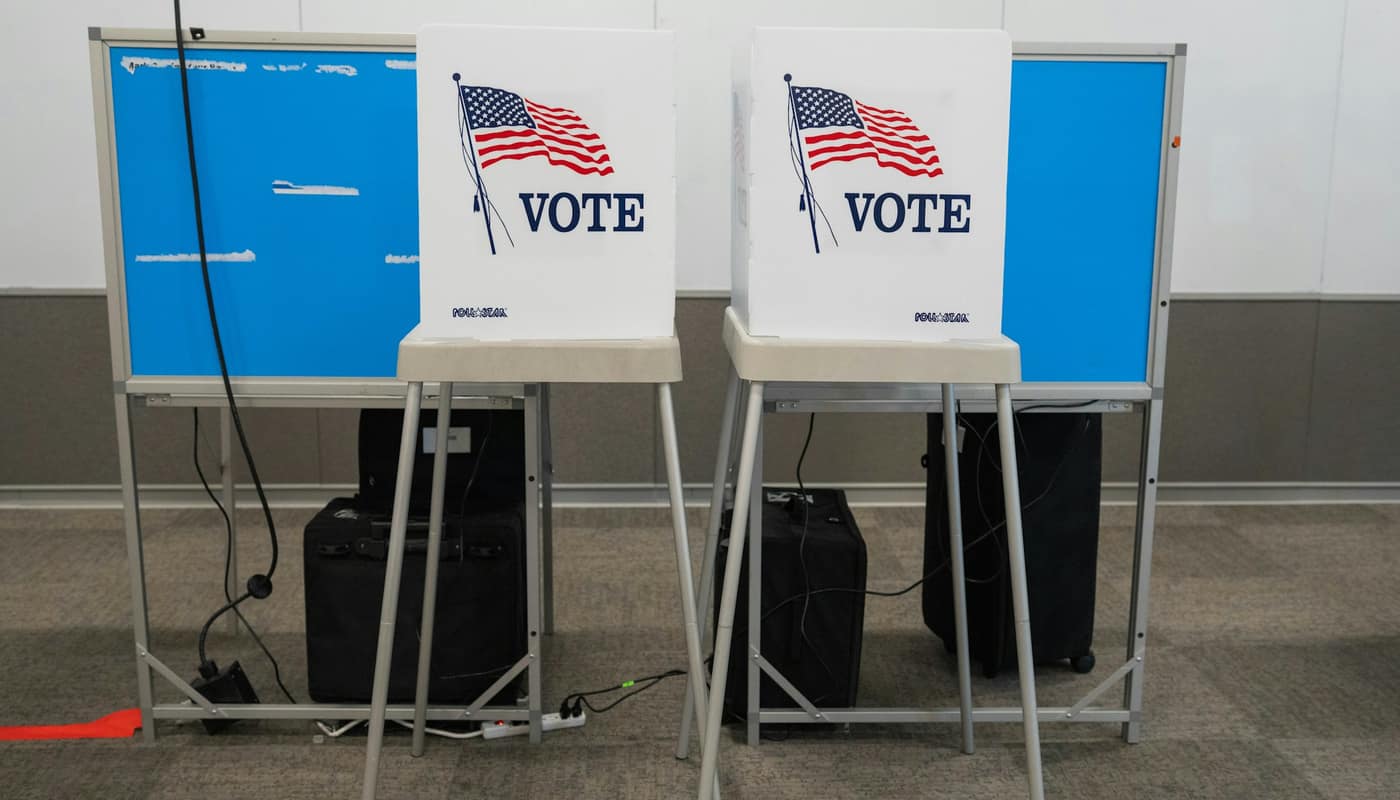
When polls close, the numbers on screen feel final, but they are not. This article explains the steps that turn Election Night totals into official results, what each step is meant to do, and why the timeline differs from state to state.
Why Election Night results are unofficial
According to the U.S. Election Assistance Commission (EAC), the federal agency that supports election administration, unofficial results are published after polls close and continue to be released until all ballots have been counted. The EAC states that even when a display reads “100% Precincts Reporting,” the results remain unofficial. Only election officials provide official results, it says, even though news organizations may declare a projected winner.
That distinction matters because a projection is a judgment by a media outlet or analyst, usually based on partial counts and statistical models. An official result is a legal determination made by the people the law assigns to make it. The two usually agree. The gap between them is where the remaining work happens.
For background on who those officials are, see who actually runs elections in the United States.
What happens during the canvass?
The canvass is the process of gathering and confirming the vote totals. The EAC describes it as aggregating and confirming every valid ballot cast and counted, including mail ballots, ballots from uniformed and overseas citizens, early votes, Election Day votes and provisional ballots. (A provisional ballot is one cast when a voter’s eligibility must be verified before the ballot counts.)
Officials also reconcile the number of ballots counted with the number of voters recorded. The EAC says this reconciliation helps check the accuracy of the data and identify areas for improvement. In plain terms, the canvass asks whether the tally adds up and whether every ballot that should be counted has been counted.
The canvass is not a second vote. It is a review of records, usually done in public meetings or by officials working under public rules, and it typically moves from the local level upward.
What is a post-election audit?
The EAC says most states require a post-election audit to verify that voting equipment counted votes correctly. The EAC also says that timing and methods differ by state. The agency has published a separate report, Election Audits Across the United States, for readers who want state-by-state detail. This article does not summarize that report, and readers should consult it or their own state’s election office for specifics.
An audit and a recount are different tools. An audit checks whether the equipment and procedures produced an accurate count. A recount re-tabulates ballots in a particular contest, usually because a margin is close or someone requested it.
Who certifies, and what does certification mean?
Certification is a formal written statement. According to the EAC, officials attest that “the election results are a true and accurate accounting of all votes cast in a particular election.” Only after every valid vote is included and all required steps are complete do results become certified, the EAC says.
Who does the certifying is not uniform. The EAC notes that localities may use a multi-member board or a single official, such as a county auditor or municipal clerk. States may assign the job to an elected official, the legislature, an appointed director or a board. State and local officials are the authorities on certification dates, according to the EAC.
The EAC adds that certification for presidential contests follows separate deadlines tied to the Electoral College. For how that system works, see the Electoral College, explained.
Does every state follow the same timeline?
No. The EAC says there is no uniform federal recount timeline, and state law sets the schedule for the steps described above. The agency offers two examples of how recounts interact with certification:
| State | Rule described by the EAC |
|---|---|
| New Hampshire | Certification takes place after the deadline for requesting a recount has passed |
| West Virginia | Counties must certify within 30 days of the election, or within 30 days of finishing a recount |
These are only two illustrations. Other states set their own deadlines, assign different officials and use different triggers. Anyone who wants to know the schedule where they live should check their state or county election office, because the EAC identifies those offices, not national rules, as the authority.
What triggers a recount?
Per the EAC, a recount can be requested by a candidate or a voter, triggered automatically when a margin falls within a legal threshold, or ordered by a court. Where a request is needed, the person asking may have to pay a fee or the cost of the recount, depending on state law.
Because the rules vary, the same vote margin can lead to an automatic recount in one state and no recount at all in another. A recount can also lengthen the calendar, since in some states certification waits until the recount is finished.
A simple worked example shows why. Suppose a state requires counties to certify within 30 days of the election, or within 30 days after a recount ends, as the EAC describes for West Virginia. If a recount finishes 12 days after Election Day, the clock for that county would run to day 42 (12 plus 30) under that kind of rule. The numbers are illustrative only, not a prediction about any real contest.
Why do results sometimes change after Election Night?
Several ordinary features of the process can move totals between the first reports and the final count, according to the EAC’s description of what the canvass includes. Mail ballots, ballots from voters overseas and provisional ballots are among the categories folded into the canvass, and they may be counted or finalized after the first unofficial reports. How quickly a state processes each type depends on its own law and practices.
For that reason, a shift in totals during the canvass is not by itself evidence of a problem, and an early lead is not the same as a final result. Equally, the existence of an official process does not mean every dispute disappears. Candidates and parties can challenge outcomes in court, a topic covered in federal courts versus state courts, and courts apply the relevant state or federal law case by case.
How to read early numbers carefully
A few habits help when following a count:
- Check who is speaking. A news projection, a campaign statement and an official election office release are different kinds of information.
- Look for the label. Official sites usually mark results as unofficial until certification.
- Note what is outstanding. Which ballot categories remain, and where, usually matters more than the current margin.
- Treat small margins with caution. Polling and projections carry uncertainty, as explained in how opinion polls work, and vote counts are subject to the same kind of care when they are close.
What remains unknown in any given contest is the exact date by which each state will finish. That depends on state law, on the number of ballots still to be processed, and on whether a recount or legal challenge intervenes.
What the process cannot tell you
The EAC’s public description is a general outline, not a legal map of any one state. It does not say how many states certify by a particular day, how long a typical canvass takes, or how often audits or recounts change an outcome, and this article does not claim to know. Those answers sit in state statutes and in the records of individual election offices. Where a single federal agency’s summary is the main source, as here, the sensible reading is that the framework is shared while the specifics are local.
Reading the process as a sequence
The path from vote to result has distinct stages: unofficial reporting, the canvass, audits where required, any recount, and certification. Each has a different purpose and a different responsible party, and state law governs the details. Understanding the order makes it easier to tell whether a news item describes a projection, a tally under review or a result that has been formally attested.
This article explains how election processes work and is not an endorsement of any candidate, party or position.
Sources: U.S. Election Assistance Commission