Sanctions are one of the most frequently used tools of foreign policy. They sit between diplomacy and military action: a way for governments to impose costs on a country, a company or an individual without firing a shot. Headlines often announce them in a single line, but behind each one is a legal structure, an enforcement system and a long-running argument about whether they work.
What counts as a sanction?
A sanction is a restriction imposed to change behavior or to punish it. Common forms include:
- Asset freezes, which block a person’s or entity’s property within the imposing jurisdiction and generally prevent anyone there from dealing with it.
- Trade restrictions, from bans on particular goods such as weapons or technology to broad embargoes.
- Financial restrictions, such as cutting institutions off from certain payment systems or limiting access to capital markets.
- Travel bans on named individuals.
- Sectoral measures, aimed at specific industries like energy, finance or defense instead of a whole economy.
“Targeted” sanctions go after named people, firms and vessels. “Comprehensive” sanctions restrict most dealings with a country. Governments have moved toward the targeted kind over the past few decades because they aim to reduce harm to civilians, though even targeted measures can have wide effects when large companies or banks are involved.
Who imposes them
Several actors can:
- Individual countries. The United States uses sanctions extensively. Authority comes from laws passed by Congress and from emergency powers, most notably the International Emergency Economic Powers Act, under which a president can declare a national emergency and block transactions with those who threaten it.
- Groups of countries. The European Union and the United Kingdom run their own sanctions regimes, and the three often coordinate.
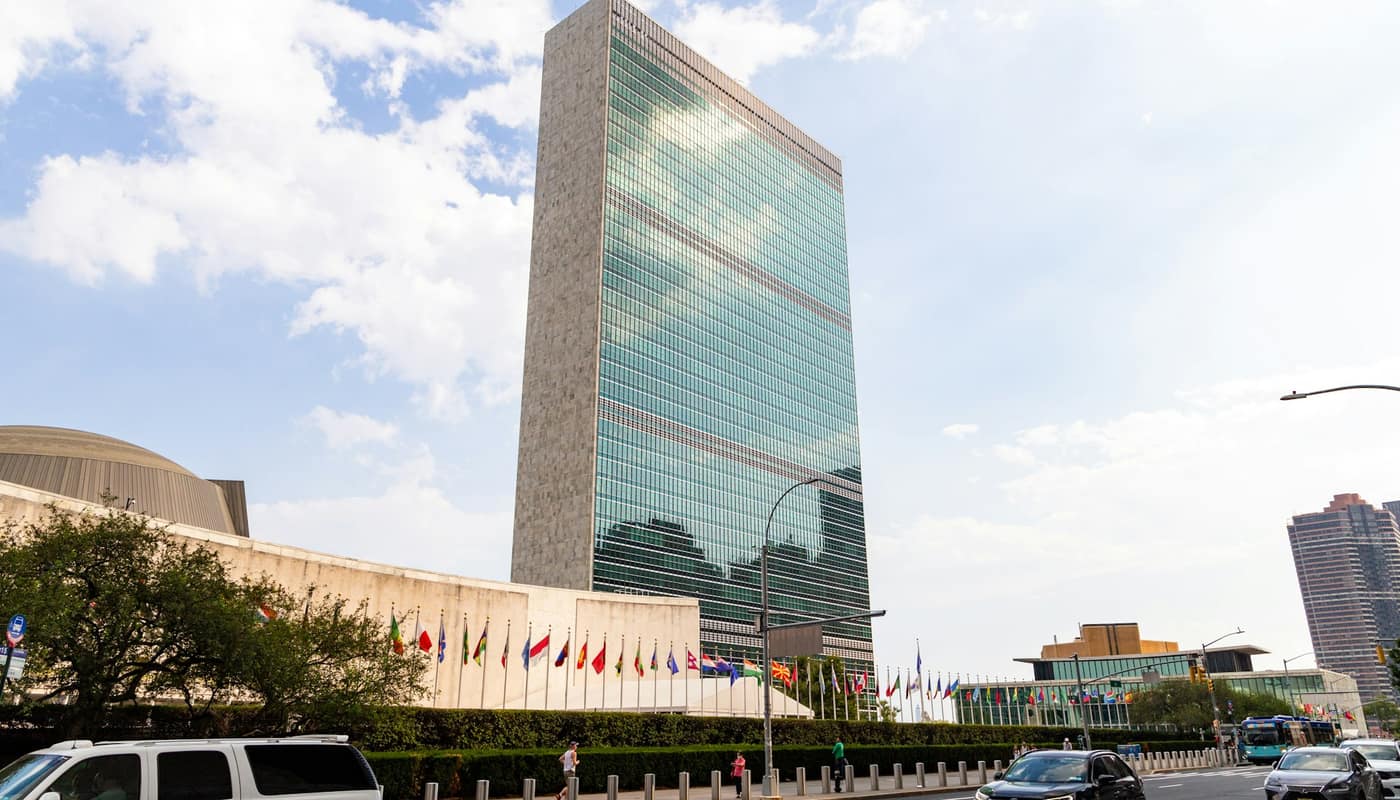
- The United Nations. The Security Council can impose sanctions that bind all member states, as discussed in what the UN Security Council can and cannot do. Because of the veto, these require agreement among the permanent members.
How U.S. sanctions are enforced
The main U.S. administrator is the Treasury Department’s Office of Foreign Assets Control, usually called OFAC. It publishes lists of designated people and entities, the best known being the Specially Designated Nationals and Blocked Persons List, and it issues licenses allowing certain otherwise prohibited activity. Those who violate sanctions can face civil penalties and, in serious cases, criminal prosecution. OFAC regularly announces settlements with companies that processed prohibited transactions.
Reach is a central feature. U.S. rules apply to U.S. persons, and in many programs also to transactions that involve the U.S. financial system, because so much of the world’s trade is settled in dollars. “Secondary sanctions” go further, threatening penalties on non-U.S. parties that do business with a targeted country or entity. Governments and companies abroad sometimes object to this extraterritorial reach.
Compliance falls heavily on banks, shippers, insurers and other companies, which screen customers and transactions against sanctions lists. Digital assets raise their own issues, since regulators have stated that sanctions rules apply to transactions in them, which is one reason compliance teams now screen crypto transactions as well.
What sanctions are meant to achieve
Goals differ, and mixing them up makes evaluation harder:
- Coercion. Persuading a government to change a policy.
- Constraint. Limiting a country’s ability to do something, such as buying weapons components.
- Signaling. Showing disapproval to the target, allies and domestic audiences.
- Punishment of specific wrongdoing, such as human rights abuses or corruption.
A sanction can fail at coercion yet succeed at constraint. If the stated aim is unclear, the claim that a sanction “worked” or “failed” is hard to test.
Why is it hard to tell if they work?
Researchers have studied the question for decades and reach cautious conclusions. Several obstacles stand in the way:
- The counterfactual problem. It is impossible to observe what would have happened without the sanction.
- Evasion. Targets find workarounds, using intermediaries, third countries, cash and shipping tricks. Enforcement agencies in turn publish advisories on such methods.
- Multiple causes. Policy changes usually have many drivers besides sanctions.
- Costs to the sender. Sanctions can hurt exporters and consumers in the imposing country and raise global prices, a dynamic that overlaps with how tariffs work and who pays them.
- Humanitarian effects. Even with exemptions for food and medicine, restrictions can make legitimate trade harder because banks avoid risk, and aid groups report problems getting transactions through.
Studies of historical episodes find that sanctions succeed in reaching their stated goals only in a minority of cases, and that success is more likely when goals are modest and when allies cooperate. Specialists disagree about how much to weigh these results, and the conclusions depend on how success is defined.
Reading a sanctions headline
Ask what exactly was done and to whom: a list addition, a license change, a trade ban, or a new law. Check who acted, since a U.S. measure differs from a UN or EU one. And look for the stated goal, because that determines the yardstick. Official notices from OFAC, the EU and the UN are public, and they are the clearest primary sources.
Sources: U.S. Department of the Treasury; Office of Foreign Assets Control; Congressional Research Service; Council on Foreign Relations; United Nations