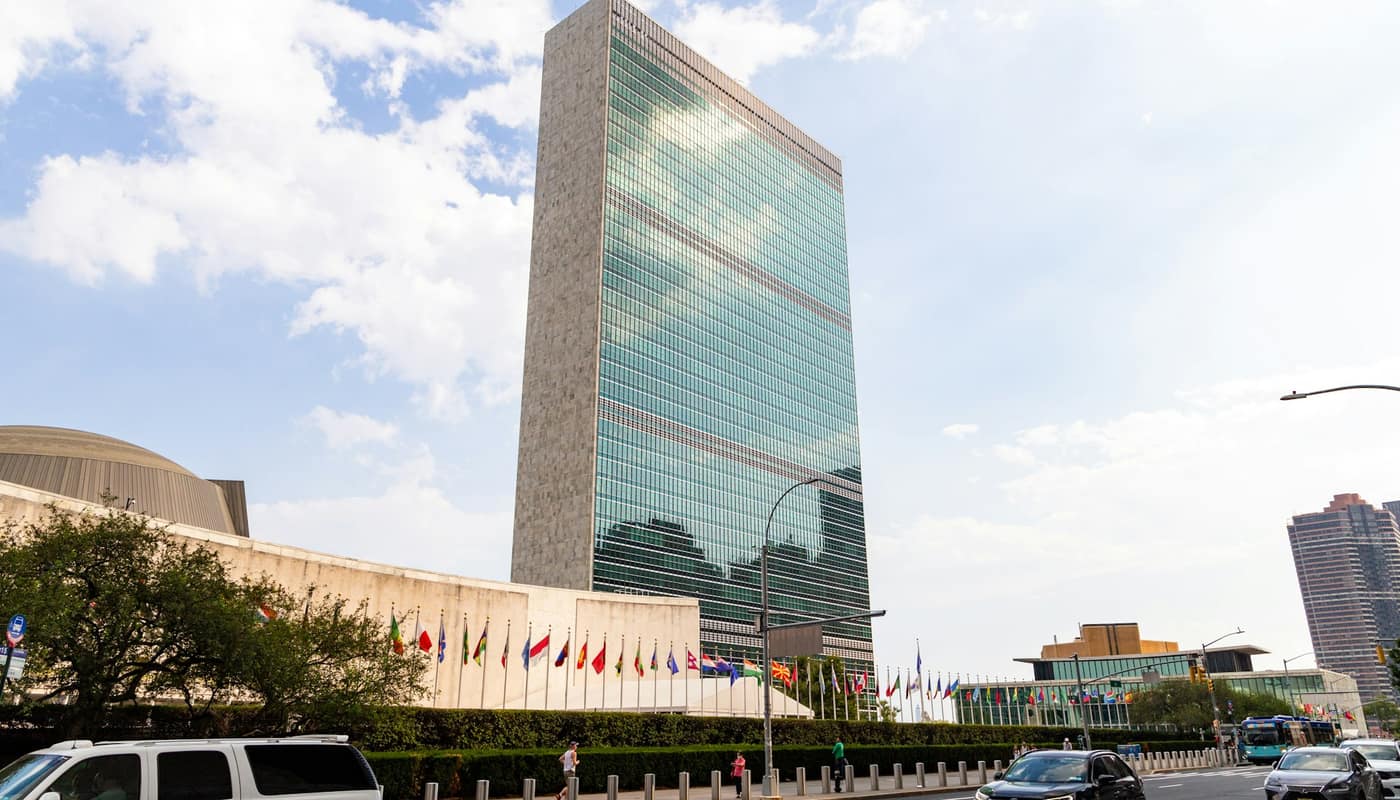
When a crisis breaks out, news coverage often turns to New York, where diplomats gather to debate a draft resolution. The United Nations Security Council is the one UN body whose decisions can be legally binding on member states. That makes it powerful on paper. It also makes its frequent deadlocks one of the most visible frustrations in world affairs.
Who sits on the Council
The Council has 15 members. Five are permanent: China, France, Russia, the United Kingdom and the United States. They were the principal victors of the Second World War, and the UN Charter of 1945 gave them lasting seats. The other ten are elected by the General Assembly for two-year terms, with seats distributed among regions of the world so that Africa, Asia-Pacific, Eastern Europe, Latin America and the Caribbean, and Western Europe and others are all represented. Five of the elected seats turn over each year.
The presidency rotates monthly among members in alphabetical order. The president sets the agenda and chairs meetings but does not have extra voting power.
What the Council is for
The Charter gives the Council primary responsibility for maintaining international peace and security. It can:
- Investigate disputes and call on parties to settle them peacefully.
- Set up and oversee peacekeeping operations, which are deployed with the consent of the parties involved.
- Impose sanctions such as arms embargoes, travel bans and asset freezes.
- Authorize the use of force by member states or coalitions.
- Refer matters to other bodies, and establish tribunals.
Under Chapter VI of the Charter, the Council recommends ways to settle disputes peacefully. Under Chapter VII, it can determine that a situation threatens or breaches the peace and take binding action. This second chapter is the source of the Council’s most forceful tools, and the Charter says that member states agree to accept and carry out its decisions.
How a resolution passes
A resolution needs at least nine affirmative votes out of fifteen, and no veto from a permanent member. A permanent member can block a substantive resolution simply by voting no, even if every other member supports it. An abstention is not a veto: a resolution can still pass if a permanent member abstains and nine members vote yes.
This is the heart of the Council’s reputation for gridlock. When the interests of a permanent member, or its allies, are directly involved, the likelihood of a veto is high, and drafters often water down proposals to avoid one. Since 2022, the General Assembly has also asked that when a veto is cast, it meet within ten working days to debate the situation, a procedure intended to make vetoes more visible, although it does not override them.
Do member states have to obey?
Resolutions adopted under Chapter VII are legally binding, but the Council has no army or police force of its own. Peacekeepers come from member states’ militaries on a voluntary basis, and enforcement of sanctions depends on governments putting them into practice. Compliance can be uneven. Committees and expert panels monitor implementation of some sanctions regimes, and they regularly report violations, but penalties for violating a resolution are limited and politically sensitive. How restrictions work in practice, from legal authorities to enforcement, is covered in how economic sanctions work.
Many Council products are not binding. Presidential statements and press statements express a collective view without creating legal obligations, and even some resolutions use language that is recommendatory.
Where does it stall, and why?
Critics point to a few recurring problems:
- The veto. Major powers can shield themselves or allies from action. Reform proposals include limiting the veto in cases of mass atrocities, but changing the Charter requires the agreement of the permanent members themselves.
- Representation. The permanent membership reflects the world of 1945. Countries such as India, Brazil, Germany, Japan and several African states have long sought permanent seats, but there is no consensus on a new formula.
- Resources and follow-through. Mandates for peacekeeping missions can be ambitious while budgets and troop numbers fall short.
Supporters respond that the Council still does a good deal of everyday work that rarely makes headlines: authorizing missions, renewing mandates, maintaining sanctions regimes and giving countries a forum where adversaries meet face to face.
How it relates to other bodies
The Security Council is distinct from the General Assembly, where all 193 member states have one vote and resolutions are generally recommendations. It is also separate from alliances that act on their own legal basis. For instance, NATO’s collective defense commitment comes from a separate treaty, and groups such as the G7 and the G20 are informal forums with no binding powers over their members at all.
Money works differently too. The General Assembly approves the UN’s regular budget, and peacekeeping operations are funded through a separate assessment on member states, so a Council mandate does not by itself guarantee that the missions it authorizes will be paid for.
When a news story says “the UN condemned” or “the UN authorized,” it is worth checking which body acted and under which chapter. A statement from the Secretary-General, a General Assembly vote and a Chapter VII Security Council resolution carry very different weight, and the details are in the text of the document, which the UN publishes online.
Sources: United Nations; United Nations Charter; Council on Foreign Relations; Congressional Research Service